What is Agilism?
Life has become too fast and too uncertain—and our old ways of handling change— plan, predict, and control—no longer work.
Agilism was built for this new reality. It is a principles-based framework for not just enduring uncertainty, but thriving in it.

Agilism is more than a method. It's a mindset. Adaptive thinking for agile living.
Instead of fighting the speed and complexity of modern life, this framework teaches you how to move with it. It helps you translate change into momentum, building clarity, confidence, and creative direction even when the map keeps shifting.
Agilism helps you not just survive uncertainty, but use it as raw material for growth.
Does This Sound Familiar?
- Work or career changes have left you second-guessing your direction — what once felt stable now feels uncertain.
- You're facing big life decisions, but the more you think through them, the less clear they become.
- Business or creative projects keep stalling — not from lack of effort, but from too many competing priorities.
- You find yourself returning to old patterns, unsure how to move forward differently.
- The future feels less like a path and more like a question mark.
If so, you’re not alone.
Most of us were never taught how to think adaptively.
We were only taught how to plan in straight lines – to set goals, follow steps, and expect predictable outcomes.
But life rarely unfolds that way anymore.
Agilism was created to bridge that gap.
It reframes the very challenges listed above — and dozens more like them. Career pivots. Burnout. Reinvention. Decision fatigue. Moments when thriving in change require more than effort. They require a shift in our thinking.
That's where adaptive thinking becomes the turning point.
Forget programming. The best skill to teach children in the 21st century is constant reinvention." - Yuval Noah Harari
The Three Forces Shaping the Nonlinear Era
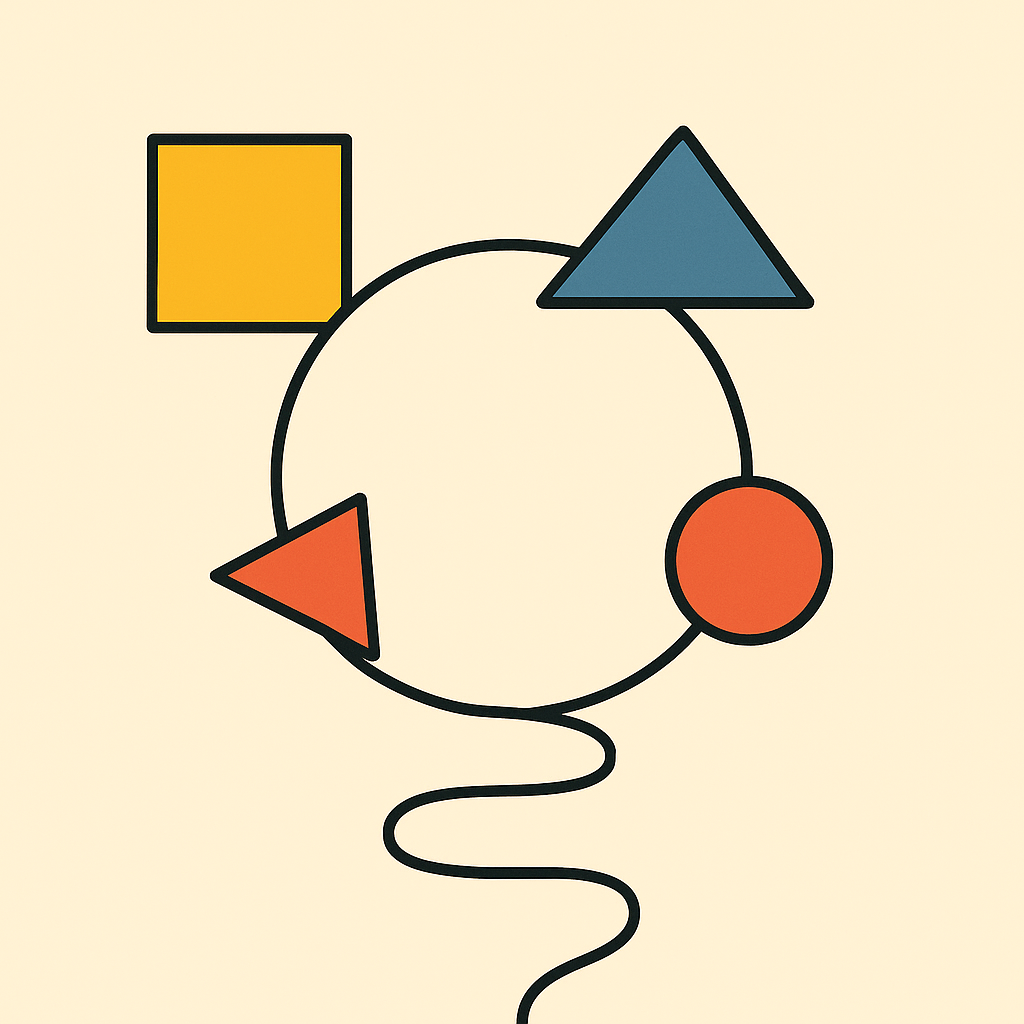
Our lives no longer follow a predictable path from study to work to retirement. Instead, they unfold in loops, pivots, and reinventions—a journey that is distinctly nonlinear.
Three forces shape this new reality, and together, they explain why Agilism exists.
1. Rapid Change
Technology, information, and culture now shift faster than our ability to plan in a straight line.
What once felt stable—career paths, industries, even our sense of self—is now fluid.
In a world of constant motion, you need a way to navigate change with structure instead of stress.

2. Constant Reinvention
We no longer change just once or twice in a lifetime. These days, we evolve continually.
From career pivots to lifestyle redesigns, reinvention has become the new normal.
Agilism reframes it not as a crisis or failure, but as a natural rhythm in a nonlinear life.
3. Longer Lifespans
We've gained decades of extra life, but not always the mental tools to see ourselves through the lens of a longer, nonlinear life.
Instead of drifting, we can treat longevity as a source of freedom—an invitation to consciously design multiple, meaningful chapters.

The 20th century taught us how to plan. The 21st is asking us how to adapt.
The Agilism Framework
Five Dimensions. Twenty-One Principles. One Adaptive System.
Agilism is not a slogan, but a structured learning model for modern life.
Its adaptive framework is built around five interconnected Dimensions, each one addressing a different layer of personal growth and adaptability.
Together, these dimensions form a nonlinear system for self-development you can explore at any depth and at any 'stage' of life—from quick insights to full-scale reinvention.

| Dimension | Focus |
|---|---|
| Lifestyle Design | Build a life that flexes with you, not against you. |
| Navigating Uncertainty | Thrive when outcomes can’t be predicted. |
| Emotional Flexibility | Stay grounded, calm, and open amid constant change. |
| Mental Frameworks | Upgrade your models of thinking for a nonlinear world. |
| Goal Dynamics | Design goals that evolve as fast as you do. |
The Framework serves as your compass through uncertainty — a system you can rely on whenever life takes a turn.
(Optional visual: looping path or five-color grid illustrating Dimensions.)
Agilism in Practice
How Agilism Helps You Navigate a Nonlinear Life
Agilism is not a theory; it is a toolkit for navigating real-world uncertainty.
Its principles translate directly into the choices and decisions you make every day – how you plan, how you take action, and how you recover when things go awry.
Here are five common arenas where adaptive thinking can change everything:
1. Career Uncertainty
When the job market is in constant flux, adaptability becomes your edge.
Agilism offers a way to replace rigid five-year plans with more fluid and adaptive career systems. (Later link: /articles/adaptive-careers)
2. Financial Volatility
Linear models for saving and retirement no longer fit our nonlinear lives. Financial resilience requires a different approach—one that embraces fluid goal-setting and a sense of dynamic stability. (Later link: /articles/nonlinear-finance)
3. Entrepreneurship
In unpredictable markets, grand plans often collapse while small, iterative bets create momentum. Entrepreneurial agility equips founders to test, learn, and adapt in cycles, turning uncertainty into an advantage.(Later link: /articles/agile-entrepreneurship)
4. Mental Resilience
Uncertainty is an unavoidable part of life, but suffering from it is not.
Agilism combines emotional flexibility with practical reflection, enabling you to transform unpredictability into a catalyst for growth.(Later link: /articles/emotional-flexibility)
5. Life Milestones
The timelines for education, family, work, and reinvention are no longer sequential.
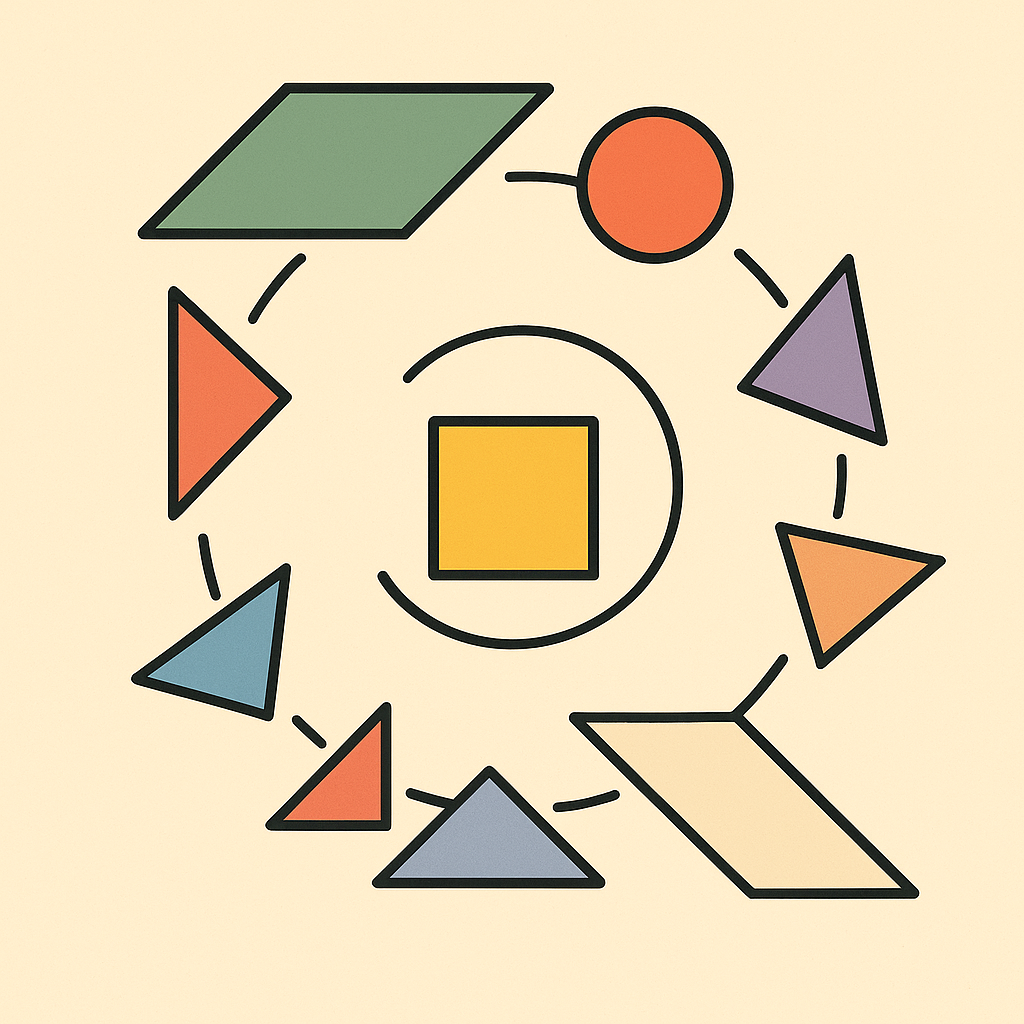
Agilism helps you approach life as an evolving design—a mosaic to be arranged and rearranged, not a ladder to be climbed.(Later link: /articles/nonlinear-lifestyle)
If Agilism were a game, it would be Tangram—a practice of constant rearrangement, not of rebuilding from scratch.
The Benefits of Agilism

What Changes When You Think Adaptively
Engaging with Agilism transforms how you think, plan, and respond. It doesn't add more rules—it replaces rigidity with rhythm.
Adapt Better
Turn uncertainty into opportunity. Build the resilience to evolve without burning out.
You stop asking "When will things settle down?" and start asking "How can I move with what's happening?"
This shift marks the beginning of an adaptive mindset—one that thrives in uncertainty rather than resisting it.
Decide Smarter
Replace over-analysis with experimentation.
Each principle trains you to test small, learn fast, and act with confidence even when the outcome is unclear.
Decision agility becomes second nature when you treat decisions as experiments, not verdicts.
Live Fuller
Design a life that fits your stage, energy, and ambitions—not someone else's timeline.
Meaning becomes a moving target you can always re-align to, rather than a finish line you miss once.
Life alignment isn't about reaching a destination. It's about continuously re-aligning to the shifting world around you, and your own shifting goals and motivations.
Agilism isn't just about coping with change. It's about designing a fulfilling life and staying sane amidst all the uncertainty and complexity.
Download the 21 Principles Guide →
Frequently Asked Questions
Q: Why is Agilism different from traditional approaches?
Most systems still operate on the assumption of stability - or a return to stability.
Agilism begins with a different premise: that flux is constant.
Rather than treating change as disruption, it shows you how to work with uncertainty as the underlying system itself.
(Later link: /manifesto/change-3-0)
Q: Is it complicated to learn?
Not at all.
Agilism is built on principles, not rigid rules. You can begin with a single idea, one small habit, or one fundamental mindset shift.
From there, you layer additional concepts as they become relevant to your circumstances.
Q: How can I apply it to my life?
Wherever uncertainty surfaces: career pivots, business expansion, financial decisions, relationships, creative endeavors, personal reinvention.
The 21 Principles serve as mental guardrails, providing language and structure precisely where chaos typically dominates.
Q: Isn’t this just another buzzword?
No!
Agilism didn't come from theory – it grew out of lived experience.
While it borrows a few ideas from behavioral science and systems thinking, its lessons come from the real world – the kinds of everyday examples we're all familiar with.
It's a simple framework built on how people already adapt when life refuses to stay still.
Q: Am I too old — or too late — to start?
Never.
Agilism transcends age because life is nonlinear. Life no longer expects you to be doing certain things at a certain age.
Agilism is about staying in motion, whatever your age. It's about remaining curious, responsive, and alive to possibility, regardless of where you stand on life's timeline.
_
These are just a few of the questions people ask when they first discover Agilism.
To go deeper — from change, careers, and reinvention to mindset and momentum — explore the full FAQ →
Start Exploring
Agilism isn't a framework you master once and move on from – it's a lifelong practice. A way of thinking for anyone who wants to live with intention in a complex, unpredictable, and ever-changing world.
You don't have to dive in all at once. Start with a single Principle that resonates, or explore the full philosophy when you're ready.
Explore the 21 Principles →
Visit the Article Archive →

"You can’t slow the pace of change — but you can learn to surf it.”
Living Agilism
Agilism isn't about chasing constant change. It's about learning to live well inside it—moving through uncertainty with clarity, keeping momentum when things shift, and staying anchored to what matters most.
You don't have to learn it all at once. Start where you are. Pick one idea, one principle, one shift in how you see things—and let it spread.
Because agility isn't speed. It's steadiness in motion. And that's what turns change from something you fear into something you can work with.
→ Begin with the 21 Principles
→ Read the Change 3.0 Manifesto
--